The Use of AI in Scientific Advice – A practitioners’ workshop
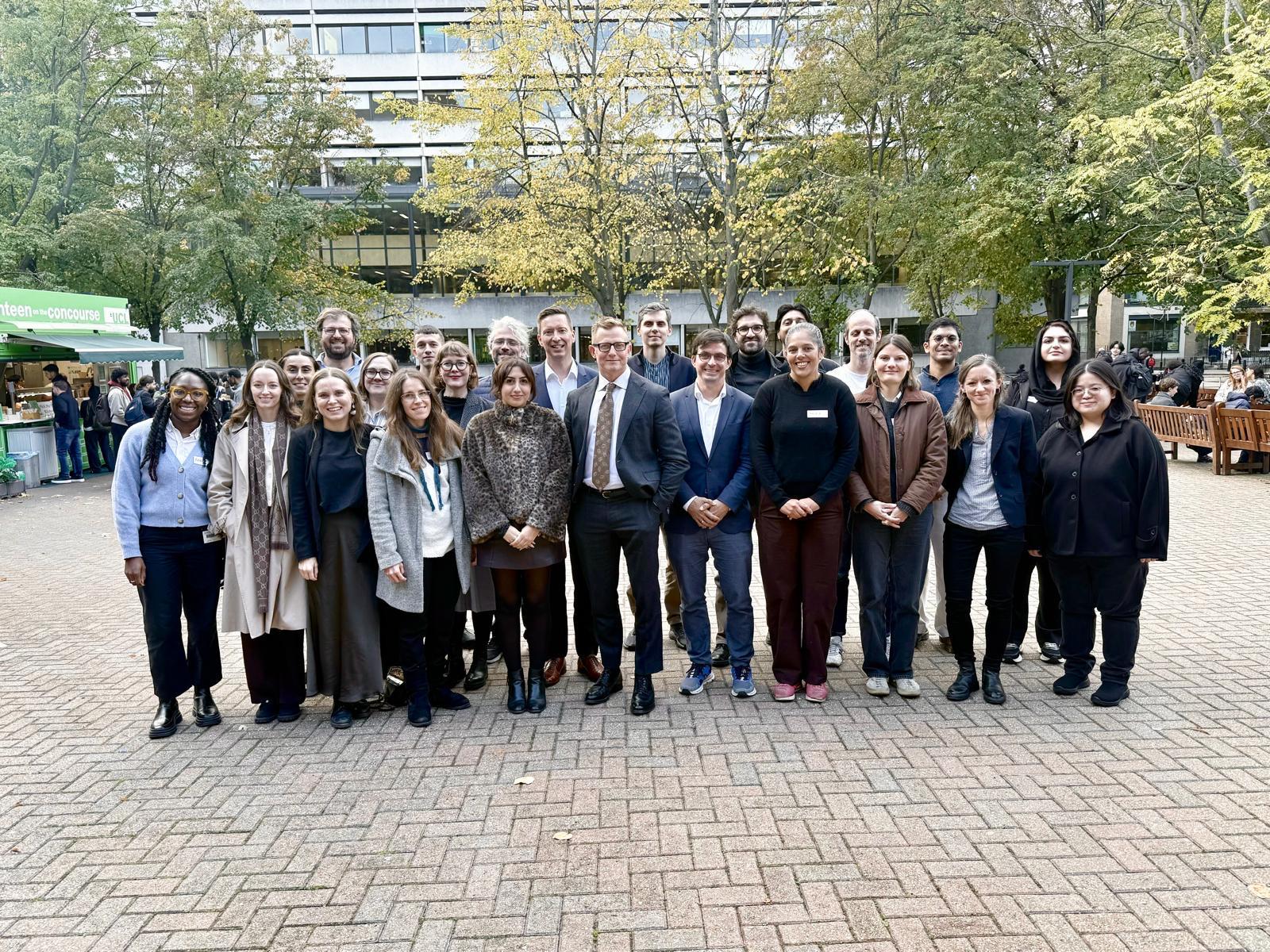
On the 19th October 2026 INGSA-Europe co-hosted a practitioners workshop at University College London on the use of AI in scientific advice. The workshop was co-organised with UCL’s Department of Science, Technology, Engineering and Public Policy (UCL STEaPP), the Finnish Academy of Science and Letters, and Aalborg University.
Scientific advice organisations across Europe and beyond are beginning to use AI in their advisory work, from literature discovery, evidence synthesis, horizon scanning, expert identification and more. Yet this remains a relatively new and poorly mapped field. There is limited shared knowledge of practical applications, the institutional conditions that enable experimentation, or the governance arrangements needed to safeguard scientific quality and legitimacy. Underpinning these developments are broader questions about the implications of AI for scientific advice: does it primarily make existing advisory processes more efficient, or does it also change what counts as evidence, who is recognised as an expert, and how advisory bodies relate to the people and institutions they advise?
The in-person workshop brought together a small group of organisations already experimenting with AI in their advisory work. The aim was to map practical use cases and tools, compare organisational experiences and emerging governance approaches, and identify shared challenges, unmet needs and opportunities for future collaboration.
Exploring emerging applications
Use cases shared at the workshop spanned a range of advisory activities, including:
- Evidence synthesis and decision support: using AI to support the identification, review and synthesis of evidence, and to inform policy advice.
- Policy communication: exploring how AI can support the development and communication of scientific advice, including policy briefs.
- Horizon scanning and foresight: using AI to identify emerging issues, explore knowledge gaps and support anticipatory approaches to policymaking.
- Expert mapping and identification: investigating how AI tools might support the identification of relevant expertise.
- Red teaming: exploring AI-augmented approaches to challenging assumptions, testing arguments and identifying potential weaknesses in advice.
The cases demonstrated both the breadth of experimentation already underway and the considerable uncertainty surrounding the field. While organisations are developing capabilities through practical experimentation and learning by doing, approaches to implementation, oversight and governance remain uneven.
Participants identified several interconnected areas requiring further attention:
- Skills and capabilities: developing the technical skills and critical understanding needed to assess and work with AI tools in different advisory contexts.
- Quality and reliability: ensuring that AI-supported outputs are subject to appropriate scrutiny, including source criticism, fact-checking, bias assessment and established standards of evidence and quality.
- Human oversight and accountability: maintaining meaningful human involvement in advisory processes, with clear responsibilities for quality assurance, oversight and ethical conduct.
- Governance and principles: revisiting organisational governance arrangements, codes of conduct and principles of responsible science advice, including transparency, diversity and equitable access.
A key message emerging from the workshop was the value of building a community of practice around AI and scientific advice. Although organisations are already developing and testing new approaches, there is considerable scope to learn from one another, particularly by sharing practical experiences to develop a more coherent understanding of what responsible AI use could and should look like in different advisory settings.
For INGSA-Europe, the workshop provided an important opportunity to bring practitioners together and begin identifying where further exchange, research and collaboration could add value. It also highlighted the potential for AI in scientific advice to become a developing strand of work for the network, supporting continued dialogue and shared learning across the science advice community.
Thank you to all the participants who shared their experiences and insights, and to our co-organisers and everyone involved in making the workshop possible: UCL STEaPP, the Finnish Academy of Science and Letters, and Aalborg University. More soon!