
Lessons from Africa: Engaging EMCRs in the Science–Policy Interface
Early- and mid-career researchers (EMCRs) are increasingly recognised as vital contributors to science–policy ecosystems. Across disciplines and regions, they bring intellectual agility, interdisciplinary openness, and a willingness to engage with complex societal challenges that do not fit neatly within disciplinary or institutional boundaries.
For INGSA-Europe and its partners, strengthening EMCR capability is not only about skills development, but about reshaping science-for-policy systems so that emerging researchers can participate meaningfully, responsibly, and sustainably throughout their careers.
Dr Pitshou Moleka is a Board Member of the Managing African Research Network (mRAN) and a Research Fellow in Earth System Governance (ESG).
His work focuses on innovation, governance, and capacity building at the science–policy interface, with extensive experience mentoring early- and mid-career researchers across Africa and internationally.
Yet despite growing acknowledgement of their importance, EMCR engagement in policy processes remains uneven. Structural incentives within academic systems still prioritise publications, grants, and disciplinary metrics over policy engagement, advisory work, or public-facing knowledge translation. Many EMCRs receive little or no formal training in communicating uncertainty, navigating political contexts, or translating evidence into decision-relevant insights. Access to policy networks often depends on informal connections rather than transparent pathways, reinforcing inequalities across regions, institutions, and career stages.
Experiences from Africa offer valuable lessons for addressing these challenges. In many African science-for-policy contexts, resource constraints, urgent societal needs, and complex governance environments have encouraged experimentation with more integrated and pragmatic models of engagement. These approaches do not eliminate structural barriers, but they demonstrate how targeted interventions can lower entry thresholds for EMCRs while strengthening the quality and relevance of science advice.
One important lesson concerns the role of mentorship combined with modest, flexible funding. Programmes such as the Science-Policy Mini grants offered by the Africa Research and Impact Network (ARIN) illustrate how small-scale financial support, when paired with structured mentorship, can significantly enhance EMCR participation in policy-relevant research. Rather than treating early-career researchers as passive trainees, these initiatives position them as active contributors, responsible for producing outputs that speak directly to policy debates. Crucially, the emphasis is not only on research quality, but on learning how to frame evidence, engage stakeholders, and communicate findings in accessible and policy-relevant ways. This combination of responsibility and support helps build confidence while avoiding the extractive dynamics that sometimes characterise short-term consultancy models.

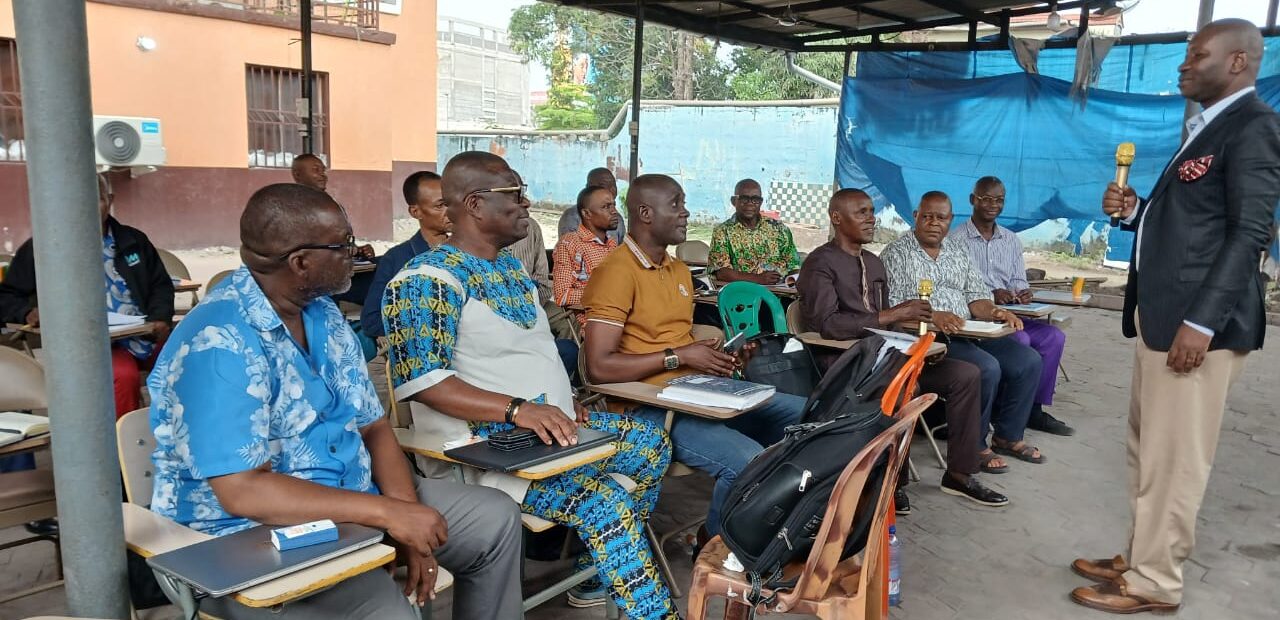
A second insight relates to skills development specifically tailored to science advice. Programmes such as the INGSA-Africa Science Advice Skills Development Programme demonstrate the value of structured training that goes beyond generic communication workshops. By focusing on policy briefs, advisory dialogues, and real-world case scenarios, such initiatives help EMCRs understand the norms, constraints, and ethical dimensions of advising decision-makers. Importantly, these programmes recognise that science advice is not simply about “speaking more clearly,” but about navigating uncertainty, power, and institutional context. For EMCRs, early exposure to these realities can prevent disillusionment and foster more realistic expectations about the role of evidence in policymaking.
Fellowship and exchange models also play a critical role. Initiatives like the Individual Policy Exchange Programme (iPEP) within the Africa Pandemic Sciences Collaborative illustrate how embedded experiences can transform how EMCRs understand policy processes. By placing researchers in direct interaction with policymakers, these programmes demystify decision-making environments and challenge the assumption that policy engagement is reserved for senior experts. At the same time, they highlight the importance of reflexivity: EMCRs learn not only how to contribute evidence, but how to listen, adapt, and recognise the limits of scientific authority. Such experiences are particularly valuable in crisis contexts, where rapid decisions must be made under conditions of uncertainty.
International collaboration platforms further reinforce these lessons. EU–Africa research and innovation mechanisms, including initiatives such as The African Research Initiative for Scientific Excellence (ARISE), show how mobility, network-building, and interdisciplinary collaboration can support EMCR engagement with policy priorities across regions. These platforms create spaces where emerging researchers can work at the intersection of science, innovation, and governance, while also navigating differences in institutional cultures and policy expectations.
For European science-for-policy systems, such collaborations underscore the value of learning from diverse governance contexts rather than assuming a one-directional transfer of expertise.
Equally important are peer-based support structures. The International Network for the Availability of Scientific Publications (INASP) Rising Scholars programme (previously AuthorAID) demonstrate how community-building, mentoring, and informal learning spaces can complement formal training. For EMCRs, these environments provide opportunities to share experiences, reflect on challenges, and develop collective strategies for engaging with policy without compromising academic integrity or personal well-being. They also help counter isolation, which is a significant but often overlooked barrier to sustained engagement at the science–policy interface.
‘From an African perspective, perhaps the most transferable insight is the importance of recognising EMCRs not merely as future advisors, but as present actors within science-for-policy systems..’
Taken together, these experiences point to several broader lessons relevant to INGSA-Europe’s capability-building efforts. First, EMCR engagement is most effective when it is embedded within supportive ecosystems rather than treated as an add-on or short-term intervention. Second, capability building must address incentives as well as skills, signalling that science advice and policy engagement are legitimate and valued components of scholarly work. Initiatives such as The Coalition for Advancing Research Assessment (CoARA), which advocate for broader research assessment frameworks, are therefore critical to long-term change. Third, context matters. What works in one setting may not translate directly to another, but the underlying principles of mentorship, inclusion, reflexivity, and institutional support are widely applicable.
From an African perspective, perhaps the most transferable insight is the importance of recognising EMCRs not merely as future advisors, but as present actors within science-for-policy systems. When given appropriate support, recognition, and responsibility, early- and mid-career researchers can make substantive contributions to evidence-informed policymaking while developing the capabilities needed for sustained engagement over time. For INGSA-Europe and its partners, embracing this perspective offers a pathway toward more inclusive, resilient, and effective science advice ecosystems that benefit both policy and research communities.