Where Does Science Land? The Last-Mile Challenge from Vietnam’s Central Highlands
A reflection from Vietnam’s Central Highlands on what happens when scientific knowledge exists, but the pathways that allow people to understand, use, adapt and respond to it remains weak.
There is no shortage of research about communities in Vietnam’s Central Highlands.
Researchers study climate change, agriculture, livelihoods, education, poverty, health, ethnic minority development and disaster risk. Governments develop policies and programmes. Universities produce knowledge. Development organisations implement projects.
Yet where does all this knowledge actually land?
More specifically, how much of it reaches the people whose lives it is intended to improve, in forms they can understand, trust, use and adapt to their own circumstances?
And there is an equally important question in the opposite direction:

Dr Dang Ngoc Toan is a member of the Steering Committee Member of INGSA-Asia, Adjunct Fellow at Western Sydney University, and CEO of the Central Highlands Center for Community Development and Climate Change Adaptation (CHCC), Vietnam.
His work focuses on education, community development, evidence use, institutional capacity and strengthening connections between knowledge, policy and communities.
How much of what communities themselves know and experience travels back into research, policy and science advice?
These questions point to what I have begun to think of as a “last-mile capability gap”: the distance between the existence of knowledge or evidence-informed policy and the actual capability of people to use, adapt and benefit from it in their everyday lives.
A region surrounded by knowledge, but not always connected to it
Vietnam’s Central Highlands provides an important setting in which to consider this problem.
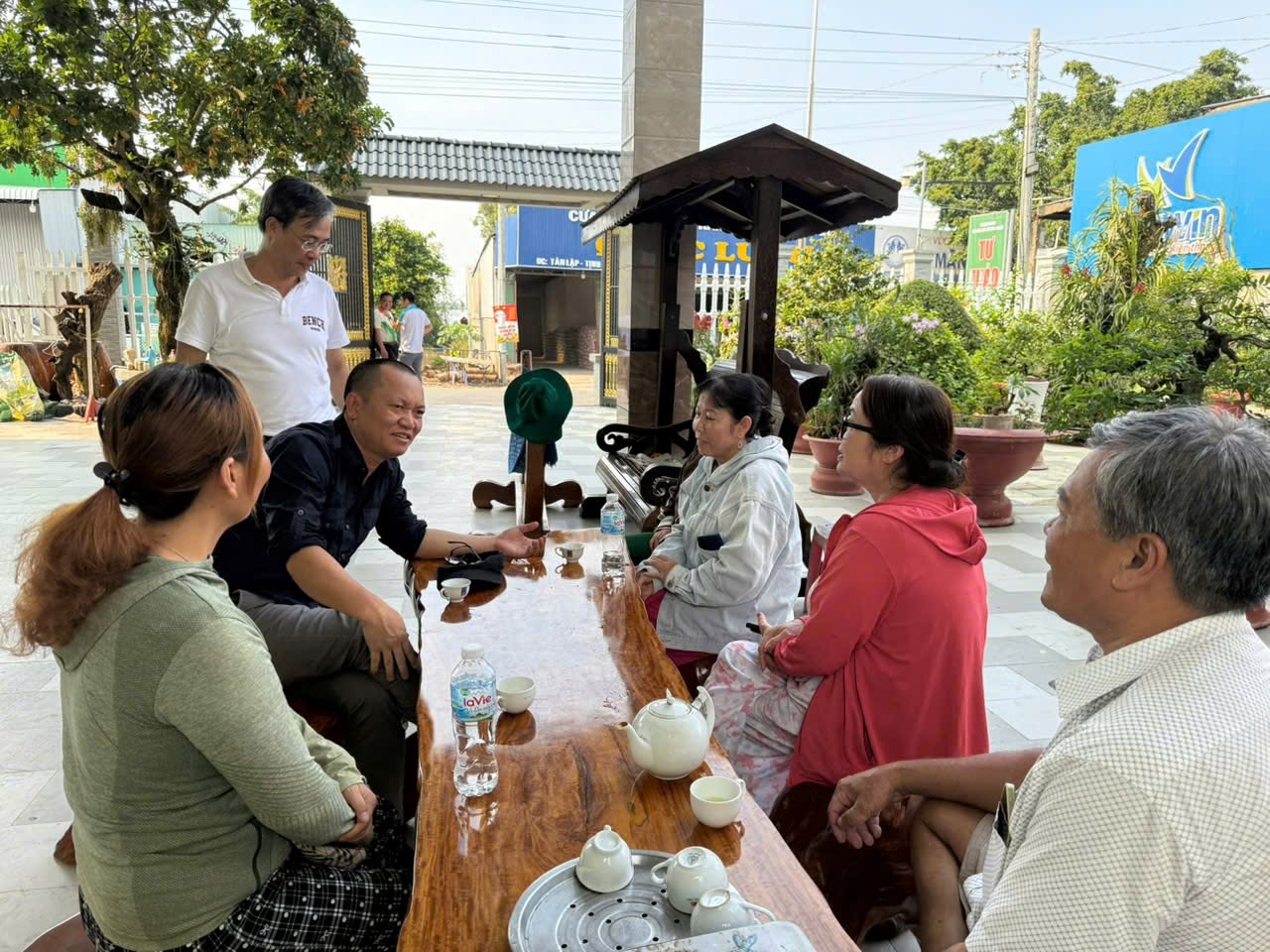
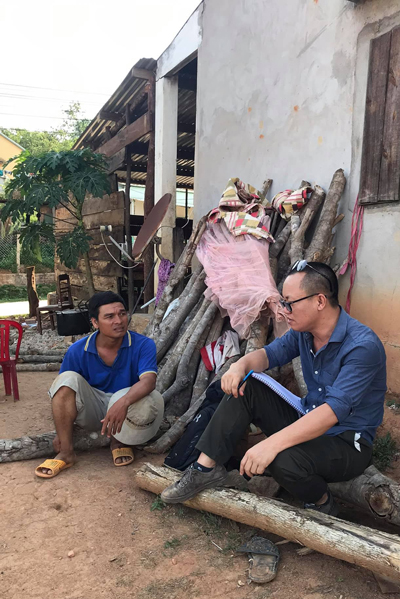
The region is culturally and socially diverse, home to many ethnic minority communities with different languages, traditions, livelihoods and educational experiences. Many communities remain geographically and socially distant from universities, research institutions, professional networks and other places where formal knowledge is produced and exchanged.
For families facing immediate livelihood pressures, priorities are understandably practical: this season’s crop, household income, food security, children’s education, health and the uncertainties of everyday life.
Scientific knowledge enters this environment only if it can cross several boundaries.
It must cross geographical distance. It must cross language and literacy differences. It must make sense alongside local knowledge, cultural practices and different ways of understanding the world. It must compete for attention with immediate livelihood priorities. And, importantly, it must reach people through institutions and relationships that they recognise and trust. This means that producing good research is only the beginning. There may, in fact, be considerable knowledge about a community without there being enough usable knowledge within that community. At the same time, there may be considerable knowledge within the community that rarely finds its way into the institutions conducting research or making decisions about it. This is not simply a communication problem. It is a problem of connection.
When evidence does not travel
Climate change and disaster response make this problem particularly visible.
Vietnam has accumulated considerable scientific knowledge, climate information and experience in disaster management. Following severe events, affected communities may also receive assistance through emergency relief, reconstruction and livelihood support.
All of these interventions matter. But another question deserves attention:
After the assistance has gone, is the community more capable of anticipating, understanding, and responding to the next event?
If the answer is uncertain, then perhaps our measure of success needs to extend beyond what was delivered.
We also need to ask:
What capability remained?
This distinction matters for science advice. We sometimes imagine knowledge moving through a relatively linear pathway:
Science → Advice → Policy → Community
But the reality is much more complicated. A policy may be strongly informed by evidence when it is designed. Yet by the time it reaches a rural or remote community, it encounters language, culture, geography, livelihoods, local institutions, trust, previous experience and different understandings of risk. Evidence does not enter an empty space. It enters people’s lives. This is why I increasingly think that the “last mile” is not simply the final stage of delivering information.
It is where evidence meets life.
And that meeting can change the meaning, relevance and usability of the knowledge itself.
The missing middle
This leads to another question:
Who helps knowledge make that journey?
Vietnam has extensive government structures extending from national to local levels, together with mass organisations and other institutional networks that play important roles in connecting government and communities. These channels matter. But there may also be a need to pay greater attention to the spaces between research institutions, government and communities.
Who translates academic and scientific knowledge into forms that make sense locally? Who helps communities interrogate that knowledge rather than simply receive it? Who creates spaces in which scientific evidence can meet indigenous knowledge, local experience and livelihood realities? And who carries what communities know and learn back towards researchers and policymakers?
Perhaps one of the less visible challenges in science advice is therefore the weakness, or sometimes absence of, effective knowledge intermediaries. We might think of these as “translation stations” within a wider knowledge ecosystem: people, organisations, institutions or trusted networks capable of connecting different worlds of knowledge.
If so, the relationship we need may look less like:
Science → Advice → Policy → Community
and more like:
Science ↔ Advice ↔ Policy ↔ Community
The arrows matter.
They suggest that communities should not be understood simply as the final recipients of evidence-informed decisions. They are also holders and producers of knowledge.
Science advice becomes more inclusive when knowledge is able to travel in both directions, when evidence can be translated into local realities, and when local realities can challenge, refine and reshape evidence, advice and subsequent decisions.
From access to adaptive capability
I encounter a similar question in my work in vocational education.
For ethnic minority young people in the Central Highlands, we understandably focus on access to education, qualifications and employment.
All are important. But the world these young people are entering is changing rapidly. Technologies evolve. Occupations disappear or transform. Employers demand new combinations of technical and human capabilities. Climate and economic changes may also reshape the livelihood opportunities available in their own communities.
No vocational institution can know precisely which skills a student will need ten or twenty years from now. This makes me wonder whether the purpose of education should extend beyond preparing a young person for their first job.
We should also ask whether education prepares them for their fifth job, or perhaps for a job that does not yet exist.
- Do students leave education with the confidence and agency to seek new knowledge?
- Can they recognise when what they know is no longer sufficient?
- Can they build networks beyond their immediate communities?
- Can they access new sources of knowledge and opportunity?
- Can they learn, unlearn and relearn?
For young people already relatively disconnected from professional, institutional and knowledge networks, these capabilities may become particularly important.
The last-mile problem in education is therefore not simply whether knowledge reaches students. It is whether education enables them to remain connected to knowledge, opportunity and learning throughout their lives. This is why I use the term “last-mile capability gap.”
The gap is not simply between knowledge and information. It is between what evidence-informed institutions intend to enable and what people are able to understand, use, adapt and sustain within their own circumstances.
Turning the question into a small experiment
These questions are now informing an initiative I am developing with Dak Lak College:
“Empowering Ethnic Minority Students at Dak Lak College for Market Adaptation and Sustainable Livelihood Pathways.”
Dak Lak College is a public vocational education institution serving young people from across the Central Highlands, including students from rural, remote and ethnic minority communities.
The proposed event, planned for next year, will bring together students, educators, enterprises, researchers, policymakers, international scholars and other partners. The intention is not simply to hold another conference. I see it as a small practical experiment.
- Can a vocational education institution become an intermediary space where different forms of knowledge meet?
- Can labour-market evidence and employers’ changing expectations reach students more directly through engagement with enterprises?
- Can researchers and educators listen more systematically to students’ experiences?
- Can students themselves participate in conversations about the systems intended to prepare them for their futures?
- Can the lived realities and aspirations of ethnic minority young people travel back into institutional thinking and decision-making?
- And can a college gradually become not simply a place where existing knowledge is taught, but an institution that connects people to changing knowledge systems?
These are open questions. But they suggest an interesting possibility.

Institutions such as vocational colleges already occupy an unusual position between government, communities, young people, employers and wider knowledge systems. Perhaps their role could extend beyond education and training. They could potentially become part of the knowledge infrastructure of a region, places where scientific knowledge, market intelligence, professional networks and community experience meet. In regions such as the Central Highlands, that intermediary role may be particularly important.
From the Central Highlands to Asia and the Pacific
I do not know whether the experience of Vietnam’s Central Highlands can be generalised. Nor should it be.
The diversity of Asia and the Pacific should make us cautious about transferring models from one community or country to another. But perhaps the questions can travel even when the answers cannot. Across the region, many communities are separated from centres of knowledge and decision-making by geography, language, income, educational opportunity, digital access, institutional structures or social disadvantage.
The specific configurations will differ. But this raises a set of questions that may deserve greater attention within science advice:
- Where does science actually land?
- Who has access to the knowledge that shapes decisions affecting their lives?
- Who translates that knowledge into locally meaningful and usable forms?
- Which institutions connect communities to wider knowledge systems?
- Whose knowledge travels in the opposite direction?
- Does evidence-informed policy leave people more capable of navigating the next challenge themselves?
These questions also connect science advice with wider discussions about inclusion, participation and deliberation. If science advice is concerned with strengthening the relationship between evidence and public decision-making, then perhaps we should pay as much attention to the interfaces between institutions and communities as we do to the interfaces between scientists and governments.
For me, this is one of the lessons beginning to emerge from the Central Highlands. The challenge is not only to produce better science. It is not even only to communicate science better. It is to build the relationships, institutions and intermediary spaces through which knowledge can travel, be questioned, be translated and ultimately become part of people’s capacity to act.
The last mile should not be where science advice ends.